杨晨|China’s Diplomacy: 2025 Review and 2026 Outlook

创建时间:  2026-01-06     浏览次数:


On the whole, the year 2025 has witnessed a volatile international landscape and extraordinary diplomacy practiced by China. The volatility of the international situation is manifested in the spillover of geopolitical conflicts, fluctuations in the economic and financial sectors, dysfunction in rule-based governance, escalating technological competition, and the overlapping of non-traditional risks. The core of such uncertainties lies in the fact that the old international order is unsustainable while a new one has yet to take shape. The extraordinariness of China’s diplomacy is reflected in its sustained economic development amid global turbulence and transformation, along with a more proactive and assertive foreign policy. This has fostered a positive cycle of mutual empowerment between development and diplomacy, enabling China to emerge as a defender, builder and contributor to the current international order.


A. Proposing an Initiative–the Global Governance Initiative (GGI)

On September 1, 2025, General Secretary Xi Jinping put forward the Global Governance Initiative (GGI) at the Shanghai Cooperation Organization (SCO) Summit, offering an in-depth elaboration on China’s vision of global governance for the new era. As another major global initiative following the Global Development Initiative (GDI), the Global Security Initiative (GSI), and the Global Civilization Initiative (GCI), it demonstrates that as a responsible major country, China is not only committed to participating in global governance but also taking a leading role in advancing it, so as to promote the building of a community with a shared future for mankind.

Since the advent of the new era, President Xi Jinping has put forward a series of significant concepts and notions. Nevertheless, for Chinese scholars, there remains a need for in-depth research and summarization to understand these concepts and clarify the connections between them. To draw an analogy: if the “Chinese Dream” serves as the overarching goal, “peaceful development” as the pathway, the three major global initiatives as crucial strategic tools, the “new type of major-country relations” as China’s vision for the desired international relations, and the “community with a shared future for mankind” as China’s blueprint for the ideal world, then the “Global Governance Initiative” not only acts as a vital strategic tool for China’s diplomacy but also embodies China’s vision for the desired international order, which is based on the following principles: adherence to sovereign equality, abidance by international rule of law, practice of multilateralism, advocacy of a people-centered approach, and focus on action orientation.


B. Hosting Two Major Home Ground Diplomacy Events–the SCO Summit and the September 3rd Military Parade

First, hosting the SCO Summit in Tianjin. The significance of the Shanghai Cooperation Organization (SCO) is not merely a political platform distinct from Western blocs, but an important cornerstone for the future integration of Eurasia.

Though initially established as a regional security organization, the SCO has now evolved into a pivotal cross-regional platform that coordinates regional and global affairs spanning security, economy, culture and other fields.

The prior accession of Belarus has enabled the SCO to further expand its reach into Europe, while the earlier membership of India, Iran and Pakistan has solidified the organization’s strong standing in South Asia.

In addition, a host of countries including Turkey, Syria, the United Arab Emirates, Saudi Arabia, Egypt and the Maldives have expressed their aspiration to join the SCO, which fully attests to the organization’s appeal and promising prospects.

Most importantly, the SCO is one of the few international organizations where China (with Russia) holds sufficient discourse power, serving as a reliable and crucial lever for China (with Russia) to advance the building of a global order.

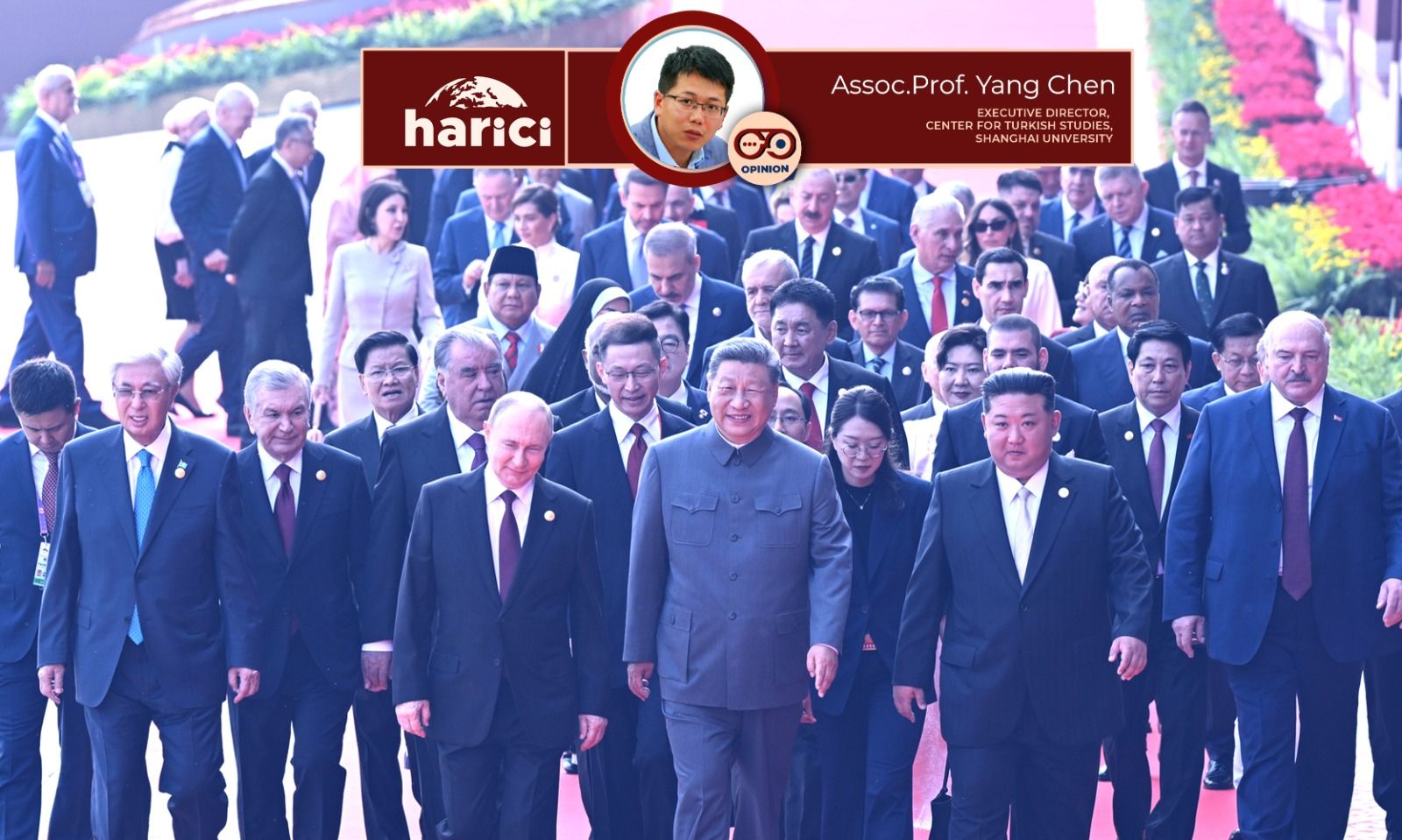
Second, the September 3rd Military Parade stood as China’s most significant home ground diplomacy event in 2025. It had to fulfill two criteria of excellence: first, a spectacular display in the square–a goal well within China’s capacity; second, a compelling showcase from the rostrum–a task falling under the purview of the Ministry of Foreign Affairs. Success in this regard would serve as a powerful endorsement and rallying call for China. Without meeting these two requirements, it would be impossible to fully demonstrate the significance of China’s War of Resistance Against Japanese Aggression to the global fight against fascism.

Despite obstruction from the United States and Japan, the event was still attended by leaders, heads of government and heads of international organizations from 26 countries, with the participants representing a broad cross-section of the international community. The two dimensions of excellence achieved by the parade not only bolstered national cohesion at home, but also elevated China’s international influence abroad, while simultaneously enhancing China’s strategic deterrence. Through the parade, China identified who its friends and foes are–all those who came to Beijing are friends.


C. Properly Managing Three Major Bilateral Relationships–China-U.S., China-Russia and China-EU Relations

The year 2025 saw China-U.S. relations experience violent storms. In April, the Trump administration imposed exorbitant tariffs on more than 100 countries and regions around the world, including China, under the pretext of “reciprocity”. At the end of September, it further escalated export controls against China. These two moves both triggered resolute countermeasures from the Chinese side. However, each of the two rounds of volatility lasted only about a month. The economic and trade consultations held in Geneva in May and the meeting between the two heads of state in Busan, South Korea at the end of October drove a temporary détente, and the speed at which bilateral relations returned to stability was unprecedented. With the release of the U.S.’s latest National Security Strategy, the U.S. has begun to regard China as an equal competitor. It is expected that the heads of state of China and the U.S. will meet on multiple occasions in 2026, which will surely provide fundamental guidance and strong impetus for the two countries to explore a sound path of coexistence in the new era.

In 2025, China-Russia relations forged ahead against all odds and scaled new heights. Marking the 80th anniversary of the victories of the Chinese People’s War of Resistance Against Japanese Aggression, the Soviet Union’s Great Patriotic War and the World Anti-Fascist War, President Xi Jinping and President Vladimir Putin exchanged visits within the year, attending the 80th-anniversary commemorative events in each other’s countries respectively. The two countries intensified coordination on strategic issues and jointly safeguarded the post-WWII international order. On the Taiwan question, Russia firmly upheld China’s propositions. Regarding the Russia-Ukraine conflict, China welcomed positive progress toward a political settlement of the Ukraine crisis, stood ready to maintain communication with Russia, implement the important common understandings reached by the two heads of state, and make unremitting efforts together to uphold regional and global peace and stability. Besides, the Shanghai Cooperation Organization (SCO) and the BRICS cooperation mechanism serve as crucial platforms for China and Russia to conduct comprehensive strategic coordination, advocate multilateralism, strengthen practical cooperation, and enhance solidarity among the Global South.

China attaches great importance to Europe’s role within the quadrilateral framework of China, the United States, Russia and Europe. The year 2025 marks the 50th anniversary of the establishment of diplomatic relations between China and the European Union. Since the start of this year, China-EU interactions have been frequent, with high-level exchanges, economic and trade cooperation, and people-to-people exchanges witnessing a continuous upsurge. As the EU’s second-largest trading partner and vice versa, China has seen the mutual importance of bilateral trade further highlighted.

At present, the EU is confronted with a host of difficulties and severe challenges. Domestically, populism continues to gain ground and protectionism keeps rearing its head, making it increasingly difficult for governments to govern. Externally, the protracted Russia-Ukraine and Palestine-Israel conflicts have led to a worsening security environment, while the United States’ sabotage of global rules has resulted in constant trade frictions between Europe and the US. The EU needs to have a clearer understanding of this: China is not the creator of the EU’s problems, but a force that the EU can draw on to address the aforementioned difficulties and challenges. China’s cooperation is indispensable for Europe’s economic development–particularly its green transition–as well as for Europe to achieve strategic autonomy, uphold multilateralism and strengthen global governance.


D. President Xi Undertakes Four Overseas Visits, with Head-of-State Diplomacy Playing an Increasingly Prominent Role

From April 8 to 9, 2025, the Central Conference on Work Related to Neighboring Countries was held in Beijing, highlighting the pivotal role of neighboring countries in China’s diplomacy. Subsequently, from April 14 to 18, 2025, President Xi Jinping paid state visits to Vietnam, Malaysia and Cambodia at their invitation. In May, he made a state visit to Russia and attended the celebrations marking the 80th anniversary of the victory in the Great Patriotic War of the Soviet Union. In June, he traveled to Astana, Kazakhstan to participate in the Second China-Central Asia Summit. From October 30 to November 1, he visited the Republic of Korea to attend the 32nd APEC Economic Leaders’ Informal Meeting and conducted a state visit to the country. Recently, political instability has emerged in some of China’s neighboring countries, which has directly hindered the smooth advancement of the Belt and Road Initiative in South and Southeast Asia. To counter and break the United States’ attempts to divide China and its neighboring countries, China should step up efforts to mediate disputes among neighboring states and further deepen its relations with them.


E. The Evolving Trend of the Current International Landscape

A distinct objective trend is emerging in the trilateral relations among major powers: a shift away from the traditional balance of power among established powers toward greater reliance on countries of the Global South. The current international landscape is defined by three key blocs: first, the Western bloc led by the United States; second, the resistance bloc spearheaded by Russia; and third, the Global South, with China included, which adheres to a strategic stance of non-alignment, non-partisanship and independent peaceful development. These three sides form a clear tripartite balance of power, while various multi-party configurations—such as China-U.S.-Russia, China-EU-Russia and China-U.S.-E—directly or indirectly drive the evolution of the aforementioned core trilateral framework.

Against this backdrop, three distinct trends in the current international landscape can be identified: The U.S. policy of “allying with Russia to contain China” is moving toward failure, and Russia’s “Look East” trend has become increasingly pronounced.

Emerging and developing countries have emerged as a pivotal force shaping the trajectory of the international landscape. Despite Trump’s return to power, the room for improvement in U.S.-Russia relations remains limited, and the contradictions between Russia and the EU are still acute.


F. Challenges Confronting China’s Diplomacy

China has always adhered to an independent foreign policy, with its overall diplomatic framework underpinned by the principle that “major powers are the key, neighboring countries a priority, developing countries the foundation, and multilateral platforms an important arena”. However, China’s relations with Western countries, particularly the United States, are currently characterized by strategic competition—a situation that has emerged as one of the most significant challenges facing China’s diplomacy.

The key to addressing this challenge lies in China assuming greater international responsibilities and enabling countries around the world to recognize the rationality of China’s system. This is already, and should continue to be, reflected in China’s responses to global crises. Looking across the globe, Europe has been re-tethered to the U.S. chariot by the Russia-Ukraine conflict; Russia is preoccupied with its own affairs; Japan, South Korea, Australia and the Philippines lean on the U.S. to contain China; India plays both sides among major powers; Latin America is geographically distant from China; Africa largely represents a defensive front for China; and the situation in the Middle East remains intricate and volatile. Under this background, the proposal of the Global Governance Initiative signifies that we are committed not only to China’s own peace and development, but also to putting forward a long-term international strategic vision with a broader global perspective to promote peace and development for all countries in the world.


G. Expectations for China-Middle East Relations in 2026


Next year will be a landmark year for China-Middle East relations. The major home ground diplomacy events will include the Second China-Arab States Summit, the China-Saudi Arabia Summit, the 55th anniversary of the establishment of diplomatic relations between China and Turkey, the 70th anniversary of China-Egypt diplomatic ties, the 10th anniversary of the establishment of the comprehensive strategic partnership between China and Saudi Arabia, as well as the 10th anniversary of China-Iran comprehensive strategic partnership.

It is anticipated that China will further engage actively in Middle Eastern regional affairs. By participating in addressing regional issues in the Middle East, China can better accumulate experience in governing and managing international conflicts in this process, and also notably elevate its status as a major power amid such complex geopolitical maneuvering. The success of China’s Middle East policy will serve as compelling evidence of China’s major-power diplomacy advancing from the periphery to the center of the world stage.


来源:https://harici.com.tr/en/chinas-diplomacy-2025-review-and-2026-outlook/

            https://harici.com.tr/cin-diplomasisi-2025-degerlendirmesi-ve-2026-ongoruleri/


上一条:江时学|区域国别研究的喜与忧

下一条:杨晨|中土战略合作关系15年——回顾与展望


杨晨|China’s Diplomacy: 2025 Review and 2026 Outlook

创建时间:  2026-01-06     浏览次数:


On the whole, the year 2025 has witnessed a volatile international landscape and extraordinary diplomacy practiced by China. The volatility of the international situation is manifested in the spillover of geopolitical conflicts, fluctuations in the economic and financial sectors, dysfunction in rule-based governance, escalating technological competition, and the overlapping of non-traditional risks. The core of such uncertainties lies in the fact that the old international order is unsustainable while a new one has yet to take shape. The extraordinariness of China’s diplomacy is reflected in its sustained economic development amid global turbulence and transformation, along with a more proactive and assertive foreign policy. This has fostered a positive cycle of mutual empowerment between development and diplomacy, enabling China to emerge as a defender, builder and contributor to the current international order.


A. Proposing an Initiative–the Global Governance Initiative (GGI)

On September 1, 2025, General Secretary Xi Jinping put forward the Global Governance Initiative (GGI) at the Shanghai Cooperation Organization (SCO) Summit, offering an in-depth elaboration on China’s vision of global governance for the new era. As another major global initiative following the Global Development Initiative (GDI), the Global Security Initiative (GSI), and the Global Civilization Initiative (GCI), it demonstrates that as a responsible major country, China is not only committed to participating in global governance but also taking a leading role in advancing it, so as to promote the building of a community with a shared future for mankind.

Since the advent of the new era, President Xi Jinping has put forward a series of significant concepts and notions. Nevertheless, for Chinese scholars, there remains a need for in-depth research and summarization to understand these concepts and clarify the connections between them. To draw an analogy: if the “Chinese Dream” serves as the overarching goal, “peaceful development” as the pathway, the three major global initiatives as crucial strategic tools, the “new type of major-country relations” as China’s vision for the desired international relations, and the “community with a shared future for mankind” as China’s blueprint for the ideal world, then the “Global Governance Initiative” not only acts as a vital strategic tool for China’s diplomacy but also embodies China’s vision for the desired international order, which is based on the following principles: adherence to sovereign equality, abidance by international rule of law, practice of multilateralism, advocacy of a people-centered approach, and focus on action orientation.


B. Hosting Two Major Home Ground Diplomacy Events–the SCO Summit and the September 3rd Military Parade

First, hosting the SCO Summit in Tianjin. The significance of the Shanghai Cooperation Organization (SCO) is not merely a political platform distinct from Western blocs, but an important cornerstone for the future integration of Eurasia.

Though initially established as a regional security organization, the SCO has now evolved into a pivotal cross-regional platform that coordinates regional and global affairs spanning security, economy, culture and other fields.

The prior accession of Belarus has enabled the SCO to further expand its reach into Europe, while the earlier membership of India, Iran and Pakistan has solidified the organization’s strong standing in South Asia.

In addition, a host of countries including Turkey, Syria, the United Arab Emirates, Saudi Arabia, Egypt and the Maldives have expressed their aspiration to join the SCO, which fully attests to the organization’s appeal and promising prospects.

Most importantly, the SCO is one of the few international organizations where China (with Russia) holds sufficient discourse power, serving as a reliable and crucial lever for China (with Russia) to advance the building of a global order.

Second, the September 3rd Military Parade stood as China’s most significant home ground diplomacy event in 2025. It had to fulfill two criteria of excellence: first, a spectacular display in the square–a goal well within China’s capacity; second, a compelling showcase from the rostrum–a task falling under the purview of the Ministry of Foreign Affairs. Success in this regard would serve as a powerful endorsement and rallying call for China. Without meeting these two requirements, it would be impossible to fully demonstrate the significance of China’s War of Resistance Against Japanese Aggression to the global fight against fascism.

Despite obstruction from the United States and Japan, the event was still attended by leaders, heads of government and heads of international organizations from 26 countries, with the participants representing a broad cross-section of the international community. The two dimensions of excellence achieved by the parade not only bolstered national cohesion at home, but also elevated China’s international influence abroad, while simultaneously enhancing China’s strategic deterrence. Through the parade, China identified who its friends and foes are–all those who came to Beijing are friends.


C. Properly Managing Three Major Bilateral Relationships–China-U.S., China-Russia and China-EU Relations

The year 2025 saw China-U.S. relations experience violent storms. In April, the Trump administration imposed exorbitant tariffs on more than 100 countries and regions around the world, including China, under the pretext of “reciprocity”. At the end of September, it further escalated export controls against China. These two moves both triggered resolute countermeasures from the Chinese side. However, each of the two rounds of volatility lasted only about a month. The economic and trade consultations held in Geneva in May and the meeting between the two heads of state in Busan, South Korea at the end of October drove a temporary détente, and the speed at which bilateral relations returned to stability was unprecedented. With the release of the U.S.’s latest National Security Strategy, the U.S. has begun to regard China as an equal competitor. It is expected that the heads of state of China and the U.S. will meet on multiple occasions in 2026, which will surely provide fundamental guidance and strong impetus for the two countries to explore a sound path of coexistence in the new era.

In 2025, China-Russia relations forged ahead against all odds and scaled new heights. Marking the 80th anniversary of the victories of the Chinese People’s War of Resistance Against Japanese Aggression, the Soviet Union’s Great Patriotic War and the World Anti-Fascist War, President Xi Jinping and President Vladimir Putin exchanged visits within the year, attending the 80th-anniversary commemorative events in each other’s countries respectively. The two countries intensified coordination on strategic issues and jointly safeguarded the post-WWII international order. On the Taiwan question, Russia firmly upheld China’s propositions. Regarding the Russia-Ukraine conflict, China welcomed positive progress toward a political settlement of the Ukraine crisis, stood ready to maintain communication with Russia, implement the important common understandings reached by the two heads of state, and make unremitting efforts together to uphold regional and global peace and stability. Besides, the Shanghai Cooperation Organization (SCO) and the BRICS cooperation mechanism serve as crucial platforms for China and Russia to conduct comprehensive strategic coordination, advocate multilateralism, strengthen practical cooperation, and enhance solidarity among the Global South.

China attaches great importance to Europe’s role within the quadrilateral framework of China, the United States, Russia and Europe. The year 2025 marks the 50th anniversary of the establishment of diplomatic relations between China and the European Union. Since the start of this year, China-EU interactions have been frequent, with high-level exchanges, economic and trade cooperation, and people-to-people exchanges witnessing a continuous upsurge. As the EU’s second-largest trading partner and vice versa, China has seen the mutual importance of bilateral trade further highlighted.

At present, the EU is confronted with a host of difficulties and severe challenges. Domestically, populism continues to gain ground and protectionism keeps rearing its head, making it increasingly difficult for governments to govern. Externally, the protracted Russia-Ukraine and Palestine-Israel conflicts have led to a worsening security environment, while the United States’ sabotage of global rules has resulted in constant trade frictions between Europe and the US. The EU needs to have a clearer understanding of this: China is not the creator of the EU’s problems, but a force that the EU can draw on to address the aforementioned difficulties and challenges. China’s cooperation is indispensable for Europe’s economic development–particularly its green transition–as well as for Europe to achieve strategic autonomy, uphold multilateralism and strengthen global governance.


D. President Xi Undertakes Four Overseas Visits, with Head-of-State Diplomacy Playing an Increasingly Prominent Role

From April 8 to 9, 2025, the Central Conference on Work Related to Neighboring Countries was held in Beijing, highlighting the pivotal role of neighboring countries in China’s diplomacy. Subsequently, from April 14 to 18, 2025, President Xi Jinping paid state visits to Vietnam, Malaysia and Cambodia at their invitation. In May, he made a state visit to Russia and attended the celebrations marking the 80th anniversary of the victory in the Great Patriotic War of the Soviet Union. In June, he traveled to Astana, Kazakhstan to participate in the Second China-Central Asia Summit. From October 30 to November 1, he visited the Republic of Korea to attend the 32nd APEC Economic Leaders’ Informal Meeting and conducted a state visit to the country. Recently, political instability has emerged in some of China’s neighboring countries, which has directly hindered the smooth advancement of the Belt and Road Initiative in South and Southeast Asia. To counter and break the United States’ attempts to divide China and its neighboring countries, China should step up efforts to mediate disputes among neighboring states and further deepen its relations with them.


E. The Evolving Trend of the Current International Landscape

A distinct objective trend is emerging in the trilateral relations among major powers: a shift away from the traditional balance of power among established powers toward greater reliance on countries of the Global South. The current international landscape is defined by three key blocs: first, the Western bloc led by the United States; second, the resistance bloc spearheaded by Russia; and third, the Global South, with China included, which adheres to a strategic stance of non-alignment, non-partisanship and independent peaceful development. These three sides form a clear tripartite balance of power, while various multi-party configurations—such as China-U.S.-Russia, China-EU-Russia and China-U.S.-E—directly or indirectly drive the evolution of the aforementioned core trilateral framework.

Against this backdrop, three distinct trends in the current international landscape can be identified: The U.S. policy of “allying with Russia to contain China” is moving toward failure, and Russia’s “Look East” trend has become increasingly pronounced.

Emerging and developing countries have emerged as a pivotal force shaping the trajectory of the international landscape. Despite Trump’s return to power, the room for improvement in U.S.-Russia relations remains limited, and the contradictions between Russia and the EU are still acute.


F. Challenges Confronting China’s Diplomacy

China has always adhered to an independent foreign policy, with its overall diplomatic framework underpinned by the principle that “major powers are the key, neighboring countries a priority, developing countries the foundation, and multilateral platforms an important arena”. However, China’s relations with Western countries, particularly the United States, are currently characterized by strategic competition—a situation that has emerged as one of the most significant challenges facing China’s diplomacy.

The key to addressing this challenge lies in China assuming greater international responsibilities and enabling countries around the world to recognize the rationality of China’s system. This is already, and should continue to be, reflected in China’s responses to global crises. Looking across the globe, Europe has been re-tethered to the U.S. chariot by the Russia-Ukraine conflict; Russia is preoccupied with its own affairs; Japan, South Korea, Australia and the Philippines lean on the U.S. to contain China; India plays both sides among major powers; Latin America is geographically distant from China; Africa largely represents a defensive front for China; and the situation in the Middle East remains intricate and volatile. Under this background, the proposal of the Global Governance Initiative signifies that we are committed not only to China’s own peace and development, but also to putting forward a long-term international strategic vision with a broader global perspective to promote peace and development for all countries in the world.


G. Expectations for China-Middle East Relations in 2026


Next year will be a landmark year for China-Middle East relations. The major home ground diplomacy events will include the Second China-Arab States Summit, the China-Saudi Arabia Summit, the 55th anniversary of the establishment of diplomatic relations between China and Turkey, the 70th anniversary of China-Egypt diplomatic ties, the 10th anniversary of the establishment of the comprehensive strategic partnership between China and Saudi Arabia, as well as the 10th anniversary of China-Iran comprehensive strategic partnership.

It is anticipated that China will further engage actively in Middle Eastern regional affairs. By participating in addressing regional issues in the Middle East, China can better accumulate experience in governing and managing international conflicts in this process, and also notably elevate its status as a major power amid such complex geopolitical maneuvering. The success of China’s Middle East policy will serve as compelling evidence of China’s major-power diplomacy advancing from the periphery to the center of the world stage.


来源:https://harici.com.tr/en/chinas-diplomacy-2025-review-and-2026-outlook/

            https://harici.com.tr/cin-diplomasisi-2025-degerlendirmesi-ve-2026-ongoruleri/


上一条:江时学|区域国别研究的喜与忧

下一条:杨晨|中土战略合作关系15年——回顾与展望